
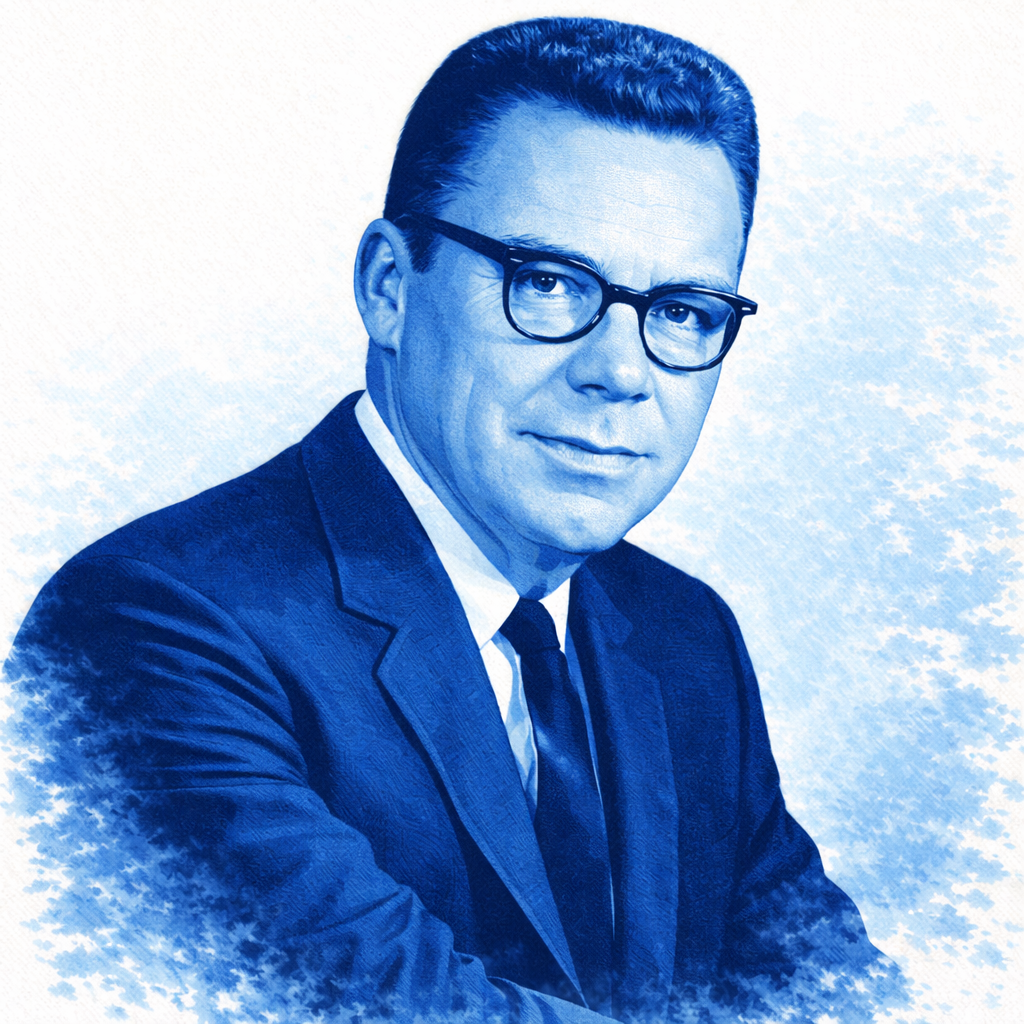
The “Dean of Personal Development,” Earl Nightingale (1921-1989) was an American radio personality best known for his 1956 recording The Strangest Secret (“Secret”). His work focused on human character development, motivation, positive mindset and self-belief.
The premise that Nightingale spoke about in the Secret 70 years ago holds true today. He spoke about 100 individuals, who if asked at age 25 if they wanted to be successful, all believed they would end up successful by the time they are 65. What actually happens is that only 5 out of 100 make the grade.
Why do so many fail? What has happened to the spark that was there when they were 25? What has become of their dreams, hopes, plans … and why is there such a large disparity between what these people intended to do and what they actually accomplished?
“We become what we think about.” Earl Nightingale
If we think about how much has changed since the release of the Secret, not much has changed in terms of individual progress, motivations and desires. A large number of 25 year olds in developed countries want recognition (whether on a large scale or through their inner circle), material success and financial independence.
One constant remains. All humans – some more than others – seek meaning. The quest to discover it can be a long but adventurous pursuit to find purpose, understanding, and deeper significance in life. The key is knowing our mission in life. We all know what we want deep within. Some want to achieve a certain level of financial success so they can enjoy certain life’s pleasures. Others want to create a lasting impact and leave a legacy. And others are still searching for their mission.
Going back to Nightingale’s group of 100 people. If only 5 people achieved financial independence by the age of 65, what happened to the other 95? We can only presume and ask the following:
- Did they give up on their dreams, or did they pivot?
- Did they realize the juice is not worth the squeeze?
- Did they realize they were chasing someone else’s definition of success i.e.., climbing the wrong ladder?
- Did their values change, and in turn, their appetites i.e., motivations?
Practical but not always easy steps:
Step 1. Course correction requires us to get clear on what we want. Truly. What is your North Star? A great way to figure it out is to imagine what you’d like to be remembered for on the day of your funeral. Were you a kind and generous person that always made people feel better, or were you the one who notoriously brought others down? Was your life all about you or about others? Write your eulogy today and live every day according to the character traits you wish you possessed more of.
Step 2. What are your values and are you living according to those values? If you do not what they are, start by writing down what you value. Take a sheet of paper and write down all the things you care about. What do you spend most time thinking about. Do you constantly wonder about leaving everything behind, getting on a sailboat and sailing into freedom (if yes, one of your values is independence/self-reliance). Once you have your list of values, narrow them down to 5-6 and number them in order of importance. Review them often and change when needed. Values will change as we mature and go through life.
Step 3. Make an intentional effort every day to move the needle from where you currently are towards the direction of where you want to be. If it is to get out of debt, start by keeping a detailed spreadsheet of your expenses. Once you have a monthly snapshot, you can decide where to cut and divert the savings into paying off debt.
“A journey of a thousand miles begins with a single step.” Lao Tzu
Disclaimer: Image was reproduced by ChatGPT 5.3.